 Skip to content


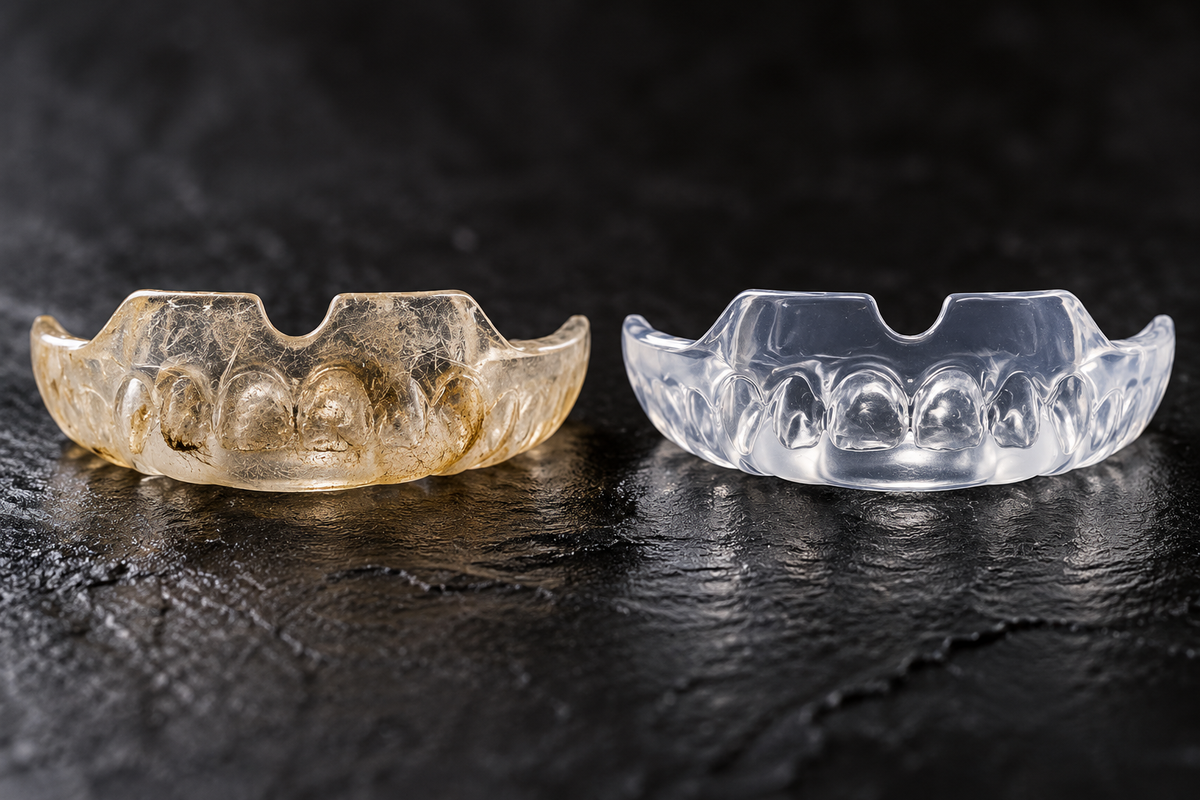
If you have ever tossed your mouthguard straight from your mouth into your kit bag without a second thought, you are not alone, and you are also not off the hook. Researchers at Swinburne University of Technology in Melbourne recently did the swab test most of us have never thought to do, and the results are worth five minutes of anyone's time who plays contact sport, or has a kid who does.
The study
The team, led by Huseyin Sumer along with Bita Zaferanloo, Vito Butardo Jr and Raghu Nandan Badari, took mouthguards, storage cases and mouth swabs from a junior Australian Football League team and sent everything off for proper lab analysis using 16S rRNA sequencing, the same method used to identify bacteria in serious clinical research. The results were published in the peer reviewed journal BMC Oral Health, not a marketing brochure.
What they found
Across the mouthguards and cases, the researchers identified thirty eight bacterial isolates spanning thirteen different genera. Around seventeen of the bacteria types found are known to be potentially harmful, with links to gum disease, tooth decay, oral infection and, if inhaled during hard breathing in training or a game, respiratory infection.
Two findings stood out. First, most of the bacteria was not even from the players' own mouths, it was environmental, picked up from soil, turf and damp storage, meaning a mouthguard left in a bag or dropped on the field is collecting far more than sweat. Second, the researchers measured the physical surface of the mouthguards under a microscope and found a used mouthguard had surface roughness of around one hundred and seventy four microns, against just zero point seven microns for a new one, an increase of roughly two hundred and fifty times. That rougher, pitted surface held around eight times more bacteria than a smooth one, which is exactly why a mouthguard that looks fine to the naked eye can still be a genuine hygiene problem.
Why a rinse under the tap is not enough
The study also tested cleaning methods. A plain water rinse removed only sixty to seventy percent of bacteria. Alcohol based mouthwash and hydrogen peroxide mouthwash were not much better. Mechanical cleaning, meaning actually brushing the mouthguard with a toothbrush and toothpaste, was the only method that got close to fully clean, removing up to ninety eight percent of bacteria.
Five risks of putting a dirty mouthguard back in your mouth
Based on this research and general oral health knowledge, here is what is actually at stake:
- Gum disease and tooth decay. Bacteria sitting against the gum line and enamel for extended periods during sport is exactly the exposure that drives both.
- General oral infection. Several of the seventeen bacteria types identified in the study are directly associated with infection in the mouth.
- Bad breath. Trapped bacteria and organic residue in the grooves of a worn mouthguard is a direct cause of persistent odour that a quick rinse will not fix.
- Respiratory infection risk. The study flagged that bacteria sitting on a mouthguard can be inhaled during hard breathing in training or a game, giving it a path beyond just the mouth.
- Picking up environmental contamination. Most of the bacteria found was not oral in origin, it came from soil, turf and damp bags, meaning a dirty mouthguard is as much a hygiene risk from the field as from the mouth itself.
What this means for your gear
The research lines up with exactly why we built the CHAMP Keep It Clean range. A quick rinse was never going to cut it, and the study proves that in black and white. Our Cleaning Foam is built for a fast clean between sessions, spray it on, wipe it off, no rinsing needed. Our Cleaning Tablets are for a deeper clean, drop one in water, soak your mouthguard, rinse and you are done. Used together, foam after training and a tablet soak once a week, you are giving your mouthguard the kind of clean that actually matches what the science says is needed.
Source: Badari, R.N., Zaferanloo, B., Butardo Jr, V. and Sumer, H., Surface deterioration and poor handling of sports mouthguards for young football players promote bacterial attachment and colonisation requiring mechanical cleaning, BMC Oral Health.